

More than 80 percent population non-vegetarian in Kmr
Ishtiyaq Ahmad
Srinagar, Aug 05 (KINS): Jammu Kashmir seems to be a main meat consuming region of India where 15 lakh ruminants are imported annually.
According to the news agency Kashmir Indepth News Service (KINS), the demand for the mutton is increasing with time and to meet it about 15 lakh small ruminants are imported into Jammu and Kashmir annually.
Similarly, the details say there is a requirement of 12 kg of poultry per person annually but the region faces a deficiency of 52 percent.
The main supply of mutton is imported from Rajasthan.
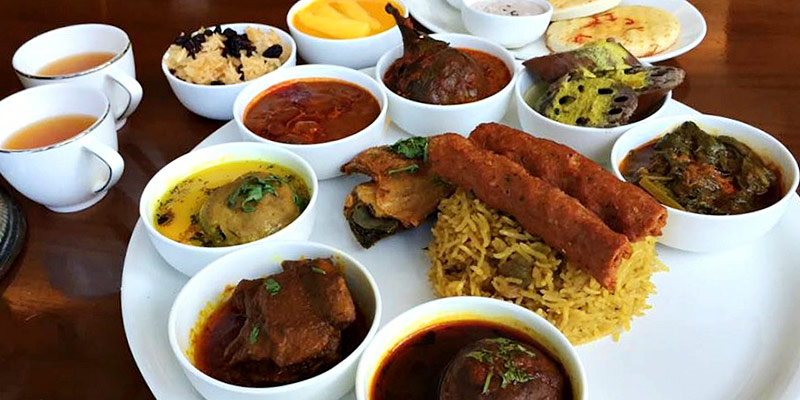
Kashmiris and people from several parts of Jammu are voracious meat eaters as compared to other Indian states. More than 80 percent of the population here are non-vegetarian.
Human population of JK comprises 1 percent of India’s population whereas the livestock population of Jammu and Kashmir constitutes 1.79 percent of the country’s livestock population (512 million).
It has pointed out widening gaps between demand and production of poultry and poultry products in Jammu and Kashmir.
“However, due to high cost of egg production under intensive poultry rearing (layers) in temperate zones, dependence on import of feed ingredients, and higher cost for providing controlled farm conditions for egg production-development a region pacific dual purpose bird for backyard poultry sector merits considerations,”
JK holds 77.14% of the country’s yak population, 20 percent of equine population and 5.21 percent of sheep population. The Jammu and Kashmir stands first in Yak population, second in equines, fifth in sheep, six in donkeys, and 17th in poultry.
Despite leading in numbers, the indicators emanating out of our livestock sector are a cause of worry. The engagement of people in this sector finally seems to have relegated to habits rather than robust economic activity,”
To make Jammu and Kashmir less dependent on imports, experts have suggested that the cross breeding of local sheep shall be initiated in the uncovered areas.
The experts have also pointed out that fodder scarcity, unorganized practices, smallholdings, disoriented pricing mechanisms, diminishing economic returns and ineffective regulatory mechanisms have further added to “woes” of the sector. (KINS)
